Objekt 2206
Separated and yet linked – the relationship between the two Basels
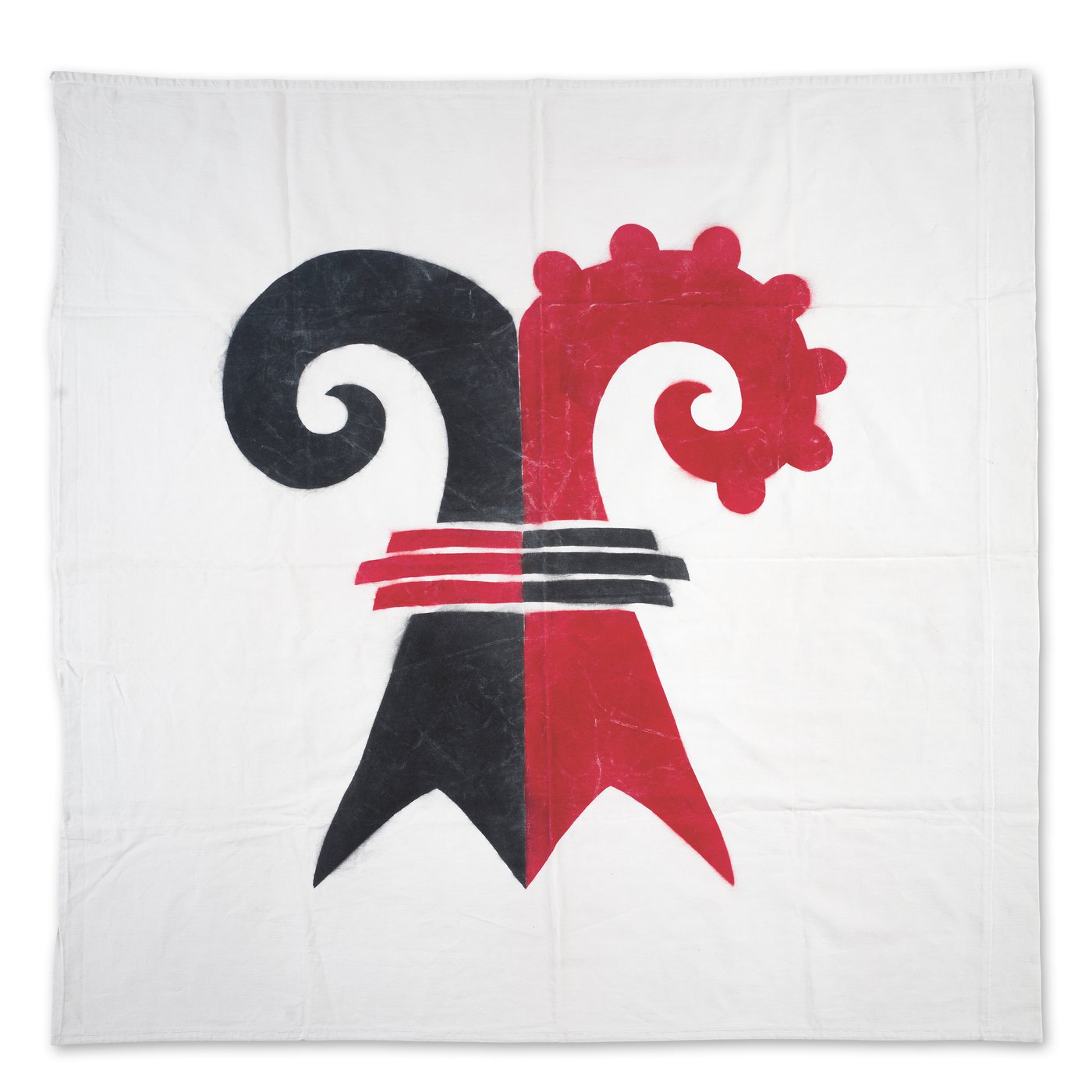
Description
In 1833 Basel split into two cantons by resolution of the Federal Diet.
Around 100 people lost their lives in the military conflict preceding the splitting of the canton.
Silk ribbon weaving remained largely unaffected by war and the canton split: in 1833 3,500 ribbon looms dotted the landscape, where home workers produced for the city merchants.
Between 1936 and 2014 six cantonal votes were held on the merger of the two Basels.
In 1936 and 1958 both cantons agreed to an initiative aimed at reunification.
The two Basels cover a combined surface of 555 km². Of this, 7% falls on the territory of Basel City, 93% on Basel Country.
At year-end 2018 200,256 persons lived in Basel City and 289,174 persons in Basel Country.
Some 44,000 persons from Basel Country commute to a job in Basel City, while 16,000 persons commute from the City Canton to a job in Basel Country Canton.
In 2014 business associations calculated up to 400 million francs in potential annual savings through a merger of the two Basels.
The 1949 ‘Contract for the Cremation of Bodies from the Basel Country Canton’ was one of the first agreements between the two Basels.
The Baselbieterlied (song for Basel Country) was created in Basel in 1887.
Object description
<h4>Symbolic re-unification</h4>
<p>Despite the splitting of the canton in 1833, the cantons of Basel-Stadt and
Basel-Landschaft have not only remained close on many levels but time
and again, political unity is sought, too. Since 1936 six cantonal votes were
held on the subject of merging, the last in 2014. The flag of the Young Green
Party of North-Western Switzerland was created during this last campaign.
It accompanied various events of the Jugend für ein Basel group,
including two bike tours through the region calling for more unity, a politically
strong Basel region, and a more streamlined administration.</p>
<p class="adddivider">
<span>Merger flag 2014</span>
<span>Liestal, 2014</span>
<span>made by Dominik Beeler, Liestal</span>
<span>linen fabric, textile dye</span>
<span>donated by Dominik Beeler, Liestal</span>
<span>Inv. 2018.1027.</span>
</p>