Objekt 2106
Rome at the Rhine
Description
Between 58 and 52 BCE, the Roman general Julius Caesar conquered Gaul,
today’s France. He set up military bases along the Rhine to secure supplies
for the Roman troops, including on today’s Cathedral Hill. When they withdrew
around 400 CE the Romans not only left behind stone buildings,
cemeteries and a network of roads, but also cultural innovations, altered
customs and new ways of living. The introduction of writing, Latin and
money transactions as well as the contacts with a new religion – Christianity
– have had lasting effects to the present day.
Object description
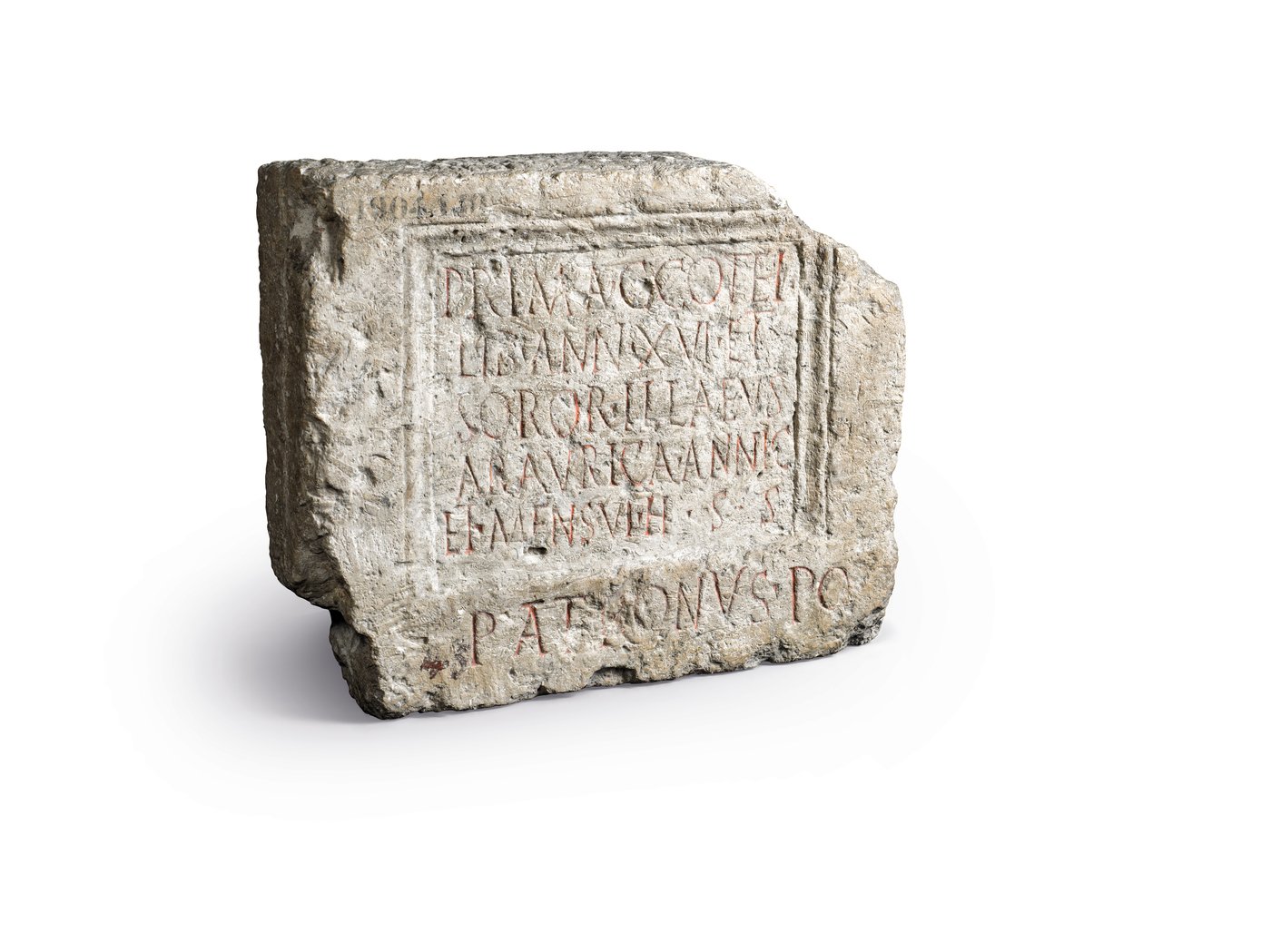
Grave stone for Prima and Araurica
Inscription: PRIMA C(AI) COTEI LIB(ERTA) ANN(ORUM) XVI ET SOROR ILLAEVS ARAURICA ANNIC(VLA) ET MEN(SES) VI H(IC) S(ITAE) S(VNT) PATRONVS PO(SVIT). Prima, freedwoman of Caius Coteius, 16 years old, and her sister Araurica, 1 year and 6 months old, lie buried here. Their protector has put up (the stone).
site: Roman Villa in Liestal-Munzach BL, 2nd-3rd century CE
limestone
old inventory
Inv. 1904.140.